
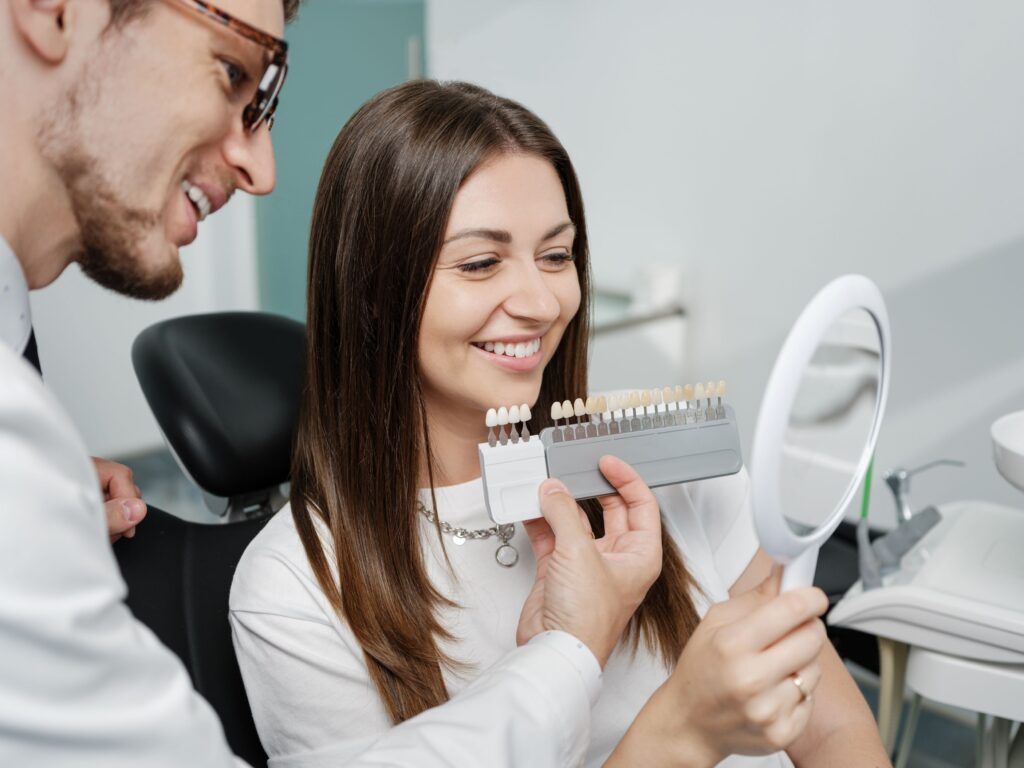
One of the first things people notice about you is the quality of your smile, and you’re not alone if you feel self-conscious about dental flaws. Unsightly chips, cracks, stains, and mild misalignments can detract from your appearance and confidence so much that you avoid showing your teeth or spending time with others.
Thankfully, your dentist can place porcelain veneers to address aesthetic concerns and rebuild your self-esteem. However, many patients are surprised to learn they’ll need temporary veneers before receiving their final restorations. Continue reading to learn more about this step in the process and why it’s necessary!
How Do Veneers Work?
Veneers are thin, ceramic shells that are customized to match or enhance the shade, size, and shape of your natural teeth and then are cemented over their front surfaces. These covers are a versatile way to mask one or more imperfections in your grin simultaneously, and they can last 15+ years if cared for correctly, making them a popular long-term solution.
These prosthetics are typically only about 0.2 to 0.5 mm thick, but for them to fit and function correctly, your dentist must remove a small amount of enamel from your teeth, which doesn’t regenerate. This leaves your smile somewhat more vulnerable to damage, disease, and decay.
Why Do I Need Temporary Veneers?
Once your teeth have been prepared, your dentist can make impressions of your mouth that are sent to a dental laboratory, which uses them to begin making your one-of-a-kind cosmetics. It can take a week or two for them to be delivered, so your provider will likely want to place temporary veneers to safeguard your smile in the meantime.
How Are Temporary Veneers Different?
These short-term restorations are only intended to be worn for a short time, so they’re not made from the same resilient material as the final products will be. Instead, they’re usually made from tooth-colored acrylic or composite resin. As a result, they’re usually also thicker and less durable. As a result, many dentist recommend avoiding overly hard, crunchy, sticky, or darkly-toned foods that can harm them before your permanent restorations are delivered.
Furthermore, temporary veneers are secured with a weaker cement for less permanent bonding, making them easier to remove when it’s time to place the permanent ones.
If you’re considering veneers and have additional questions about the steps involved, you can learn more by scheduling a consultation with your dentist.
About the Practice
Patients at Khoi Dental Group benefit from two dentists eager to help families in Jacksonville build and maintain beautiful, healthy teeth and gums. Dr. Le and Dr. Murray share 30+ years of combined experience, and today, collaborate to deliver a comprehensive menu of services, including cosmetics, conveniently under one roof. They take the time to learn about your unique concerns and goals, then utilize advanced technology to deliver comfortable, accurate treatment results intended to last. You can request an appointment on the website or call (904) 262-8409.